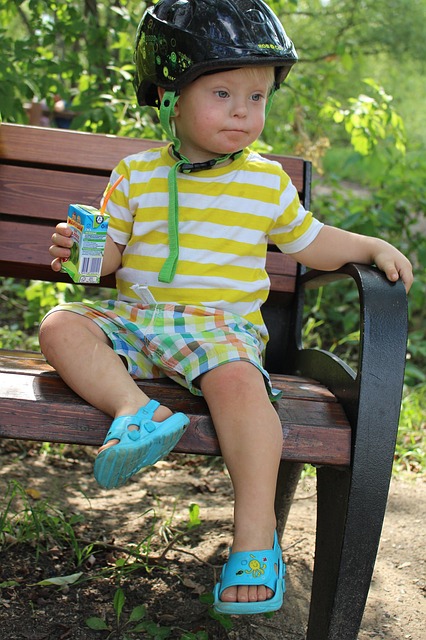
As it involves an abnormality in an individual’s chromosomes, it impacts throughout life, beginning from birth and lasting into adulthood. Not many individuals with Down syndrome have the very same symptoms. The method by which in which the illness affects each person can differ. But obtaining quality sleep is one battle that faces many individuals with Down syndrome.
Individuals with Down syndrome, both kids and adults, have higher degrees of Obstructive Sleep Apnea (OSA), a state of disordered breathing through the night. Other sleep difficulties, such as parasomnias and sleep stress, can pose substantial problems for individuals with Down syndrome.
Inside this guide, we will go comprehensive about Down syndrome, how it affects sleep, and also the way that sleep could be enhanced for individuals with this illness.
Down syndrome is a hereditary illness. Individuals with Down syndrome have an additional copy of a chromosome in their DNA, and this also usually means that the problem is present from birth. Growth for a baby and later affects.
The impacts of Down syndrome and their severity may differ from person to person.
Many times, children with Down syndrome have an IQ that’s mild-to-moderately reduced and are somewhat slower to start talking. Other social development problems can relate to focus, judgment, and spontaneous behaviour.
Some attributes are found with Down syndrome.
These contain a face which looks flattened, particularly at the nose, almond-shaped eyes using an upward angle, quite little white spots on the iris, smaller ears, a brief neck, diminished muscle tone, and loose joints, protrusion of the tongue out of the mouth, decreased height, and bigger pinky fingers that may curve toward the palms.
These may consist of obstructive sleep apnea, ear infections, hearing difficulties, gastrointestinal problems, and heart problems.
This equates to approximately 1 out of every 7,000 babies born from the U.S.
There are three different types of Down syndrome. However, the most common — roughly 95 per cent — is named Trisomy 21. This is a good method of describing the existence of an excess copy of chromosome 21.
Down syndrome may influence mood, learning, and behaviour, sleep problems in people with this illness have probably been underdiagnosed. Often, these problems have been credited to this illness itself instead of as a possible effect of inadequate sleep.
In the past several decades, however, scientists have discovered that individuals with Down syndrome face specific barriers to sleep. These sleep problems might cause or aggravate other health problems such as those often associated with Down syndrome.
It’s projected that at least 50 per cent of kids with Down syndrome suffer from sleep issues. Information for adults is much more restricted, but studies suggest that these problems persist as individuals age.
Within this part, we will deal with a few of the particular sleep disorders and issues which are known among individuals with Down syndrome.
You might also want to read How To Deal With Sleep Apnea Machine Side Effects